AI Search, AEO, and GEO are often treated as separate disciplines. This guide separates their meanings, mechanisms, and measurements while showing which work remains foundational SEO.
Quick summary
What you get from this article
- AI Search synthesises answers from sources and often provides citations.
- AEO emphasises answer clarity; GEO emphasises mentions and citations in generative answers.
- SEO remains the foundation for discovery, indexing, and quality evaluation.
- Google requires no special AI schema or separate GEO discipline.
- Measure mentions, citations, referrals, and conversions together.
What AI Search is and how it differs from a classic results page
AI Search does more than list links. It gathers information from several sources, synthesises an answer, and offers citations or links for deeper exploration. Examples include Google AI Overviews and AI Mode, ChatGPT Search, Microsoft Copilot, and Perplexity.
Classic search ranks pages in a list. AI Search may split one request into subqueries, retrieve several pages, and compose a new response. A business can therefore appear as a cited source or as a named brand even when no click occurs.
Answers vary by prompt, context, country, time, and platform. Visibility is less like a fixed position from one to ten and more like the probability of being selected across an important set of questions.
- Traditional Search — pages compete for link positions
- AI Search — evidence, citations, and mentions compete for inclusion
- Some journeys end in the answer; others create high-intent referral clicks
- Platforms use different indexes, crawlers, and citation interfaces
Image slot prepared — artwork to follow
Comparison of a traditional link results page with an AI answer synthesised from cited sources
How AI Search works from a website owner's perspective
The practical flow has four stages: discover and access a page, retrieve evidence from a search index, break a request into supporting questions, and generate an answer with sources. Retrieval-augmented generation helps models use current web evidence instead of model memory alone.
Google says AI Mode and AI Overviews may use query fan-out. OpenAI says public sites can appear in ChatGPT Search when OAI-SearchBot is not blocked. Bing and Perplexity use their own crawlers and search indexes.
This is why technical SEO comes first. If a page is inaccessible, hidden behind login, or blocked by a WAF, good writing may never be considered.
- Discover — find the URL through links, sitemaps, or submission
- Retrieve — select relevant evidence from indexes and sources
- Synthesize — combine evidence into an answer
- Cite — show pages or brands supporting the response
Image slot prepared — artwork to follow
AI Search flow from crawling and indexing through retrieval, query fan-out, synthesis, and citation
What SEO, AEO, and GEO mean
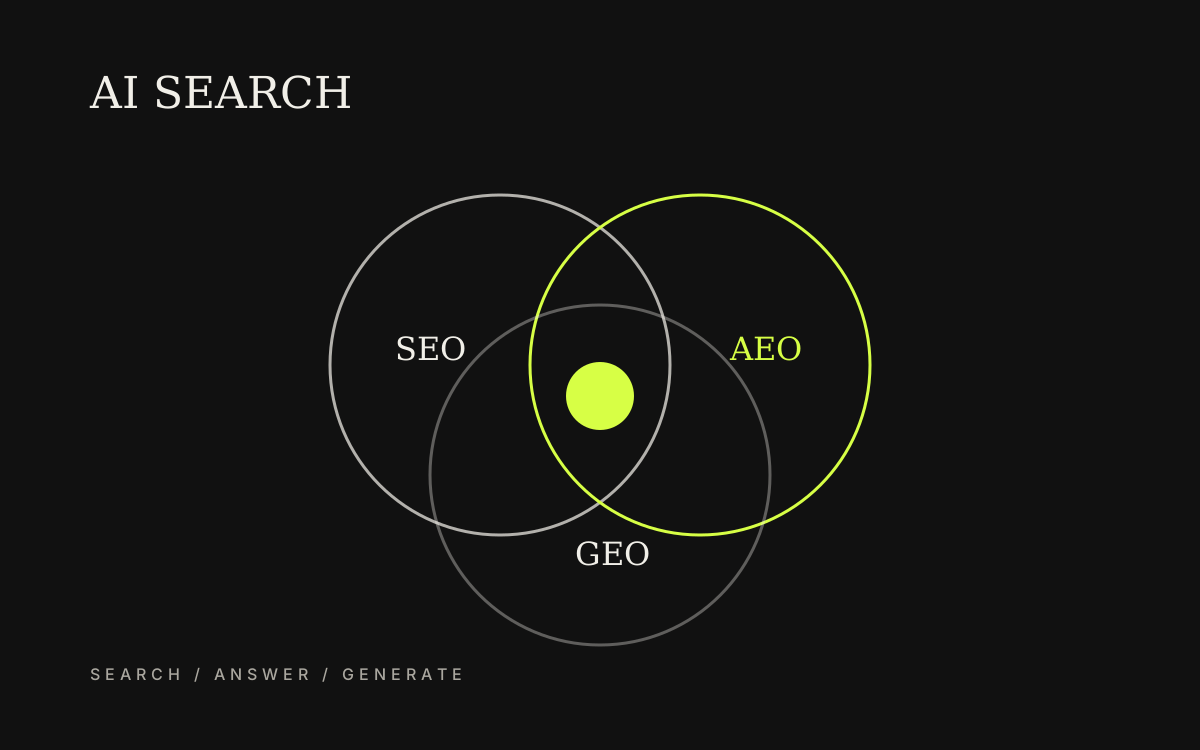
SEO is the foundation for discovery, understanding, and competition in search. AEO describes structuring content to answer questions clearly, a practice that predates generative AI through featured snippets and voice search. GEO focuses on visibility, mentions, and citations in generative answers.
They are not separate systems. One crawlable page with a direct answer, strong evidence, and external credibility can serve SEO, AEO, and GEO. Google explicitly treats optimisation for generative Search as SEO and requires no AI-specific schema.
- SEO — discoverability, indexing, ranking, and organic conversion
- AEO — direct answers, readable structure, and complete context
- GEO — citations, brand mentions, recommendations, and AI share of voice
- AI Search Optimization — an umbrella for cross-platform work
Image slot prepared — artwork to follow
Overlapping circles showing SEO, AEO, GEO, and AI Search Optimization
Which term to use with a team
Use SEO for overall search discovery and traffic, AEO when reviewing answer quality, and GEO or AI visibility when measuring citations, mentions, and share of voice across generative platforms.
Google, ChatGPT, Copilot, and Perplexity do not see the web identically
Google's AI experiences use its Search index and core ranking systems. A page must be eligible for a snippet before it can support AI Overviews or AI Mode, with no extra requirements beyond Search fundamentals.
ChatGPT Search uses OAI-SearchBot to discover content for summaries and snippets, so robots.txt, CDN, and WAF access matter. Bing's AI Performance report exposes citations, cited pages, and grounding queries across supported Copilot experiences.
Perplexity says PerplexityBot respects robots.txt and builds a search index from accessible pages. Search crawling and model training are different purposes, so crawler policies should distinguish them.
Image slot prepared — artwork to follow
Platform matrix comparing Googlebot, OAI-SearchBot, Bingbot, and PerplexityBot with reporting capabilities
What makes content worth selecting
No formula guarantees a citation, but major platforms point in the same direction: accessible pages, clear focus, evidence, freshness, and value beyond generic summaries. Google calls this non-commodity content.
A concise answer beneath a heading helps readers, but artificial chunking is unnecessary. Complete context, units, dates, methodology, and limitations make a passage reusable without changing its meaning.
- First-hand experience, cases, or original data
- Important text in HTML with useful internal links
- Consistent author, organisation, product, and location entities
- Claims supported with sources, dates, and scope
- Images, tables, and video supporting the same facts
Image slot prepared — artwork to follow
AI citation readiness pyramid from crawlability and clarity to evidence, entity consistency, and authority
How to measure AI Search without a fixed rank
Build a prompt set from real customer questions and test it repeatedly with consistent platform, location, and language. Measure whether the brand is mentioned, which pages are cited, and whether referral visitors become qualified leads or customers.
Search Console began testing dedicated Generative AI reports for Search and Discover with selected sites in June 2026. Bing AI Performance reports citations and grounding queries, while ChatGPT referral traffic can be measured in analytics.
- Mention rate — responses naming the brand
- Citation rate — responses linking to the website
- AI share of voice — visibility against competitors in the same prompt set
- Referral traffic — sessions from ChatGPT, Perplexity, Copilot, and others
- Qualified conversion — leads or revenue from AI referrals
Image slot prepared — artwork to follow
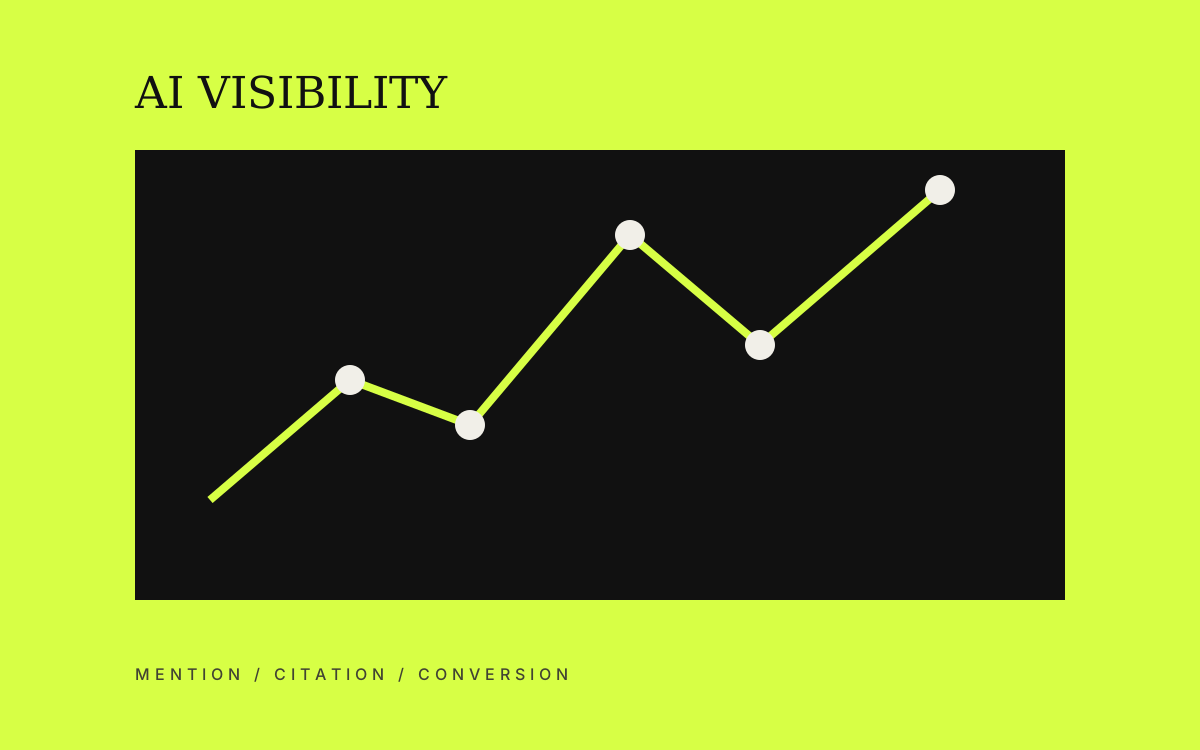
AI Search dashboard for mentions, citations, share of voice, referrals, and conversions
Should a business start with SEO, AEO, or GEO
If priority pages are not indexed or accessible, start with SEO. If pages rank but answers ramble, improve AEO through structure and clarity. If search foundations are strong but the brand is absent from comparison prompts, add GEO work through original evidence, entity consistency, and digital PR.
You do not need three separate teams. Keep one backlog and prioritise the constraint that blocks the outcome.
- Weak foundation — fix technical SEO and indexing
- Traffic but slow answers — improve answer blocks and content structure
- Strong content but few citations — add evidence, entities, and external authority
- Initial visibility achieved — measure prompt gaps and conversion
Image slot prepared — artwork to follow
Decision tree for choosing SEO, AEO, or GEO work based on website readiness
Preparation
Information to prepare before you start
- Real customer questions
- AI platforms used by the target audience
- Crawl and index status of priority pages
- Baseline mentions, citations, referrals, and conversions
- A subject owner for accuracy and updates
Related services