AI Search measurement needs several sources because no tool sees bot access, citations, brand mentions, and conversions together. This guide builds a stack around the team's questions and budget.
Quick summary
What you get from this article
- Start with first-party tools before buying an AI visibility platform.
- Search Console and Bing Webmaster Tools provide direct platform evidence.
- Analytics connects referrals with conversion, which matters more than mentions alone.
- External tools sample prompts and are best for trends and competitor comparison.
- A useful dashboard separates mentions, citations, accuracy, referrals, and revenue.
Start with the question before choosing a tool
Tool groups answer different questions: can a bot access the site, is a page indexed, which prompts mention the brand, which URLs are cited, and do referrals become leads. One purchase does not cover every layer.
Build a four-layer stack for technical access, platform visibility, cross-platform monitoring, and business outcomes. Select only tools the team will review and act on.
- Technical — robots, server logs, crawling, and indexing
- Platform — Google Search Console and Bing Webmaster Tools
- Visibility — prompts, mentions, citations, and competitors
- Outcome — analytics, CRM, lead quality, and revenue
Image slot prepared — artwork to follow
Four-layer AI Search tool stack from technical and platform data to visibility and business outcomes
Free tools to install first
Google Search Console covers indexing, queries, pages, and Core Web Vitals. Dedicated Generative AI reports for Search and Discover began testing with selected sites in 2026. Bing Webmaster Tools offers AI Performance in public preview with citations, cited pages, grounding queries, and trends.
Analytics measures referrals from ChatGPT, Perplexity, Copilot, and other sources with downstream events. Server logs verify which URLs OAI-SearchBot, Bingbot, and other crawlers request and which status they receive.
- Google Search Console — Search and Generative AI visibility
- Bing Webmaster Tools — AI citations and grounding queries
- Analytics — referrals, engagement, and conversions
- Server logs — bot access, status codes, and crawl frequency
- URL inspection and robots testers — page-level diagnosis
Image slot prepared — artwork to follow
Free-tool dashboard with Search Console Generative AI, Bing AI Performance, analytics, and server logs
Track prompts manually before buying software
Create a sheet for prompt, intent, platform, location, date, brand mention, cited URL, competitors, accuracy, and notes. Select 20–50 prompts tied to real decisions and check monthly or weekly depending on the market.
Manual review reveals nuance, but variables need control. Avoid repeated querying until a preferred answer appears, and keep screenshots or answer links when supported.
- Branded prompts — direct questions about the company or product
- Category prompts — suitable providers or options
- Comparison prompts — alternatives and trade-offs
- Problem prompts — issues the service can solve
- Local prompts — location, language, and Thai-market context
Image slot prepared — artwork to follow
Manual prompt tracking sheet with mention, citation, competitor, accuracy, and date fields
Choose paid tools by workflow size
Ahrefs Brand Radar is useful for broad prompt discovery, mentions, citations, impressions, AI share of voice, and custom tracking across AI Overviews, AI Mode, ChatGPT, Perplexity, Gemini, and Copilot.
Semrush AI Visibility combines visibility, competitor research, prompt research, sentiment, and position tracking with existing SEO workflows. Otterly suits teams seeking straightforward custom prompt monitoring, citation tracking, and alerts without a large SEO suite.
Multi-market organisations may evaluate enterprise platforms such as Profound, but should pilot one market and a small prompt set before a long contract.
- Ahrefs Brand Radar — broad prompt index and search research
- Semrush AI Visibility — competitor, prompt, and SEO workflows
- Otterly — accessible prompt monitoring and alerts
- Enterprise platforms — custom data, markets, and team workflows
- Evaluate platform coverage, country, frequency, export, and API
Image slot prepared — artwork to follow
AI visibility tool matrix comparing prompt database, custom tracking, platforms, countries, and API
Limitations of AI visibility tools
External tools cannot see every private user prompt. Most run a sample prompt set under defined conditions, making the data a sample rather than a census. Results can differ by account, country, and conversation history.
An AI visibility score is a vendor formula, not a Google or OpenAI score. Compare trends inside one tool and competitors under matching conditions rather than comparing vendor scores directly.
- Prompt sets may not match customer questions
- Answers vary and may be personalised
- A citation does not imply positive sentiment or conversion
- Mentions may rely on stale or uncontrolled sources
- Country, language, and platform coverage differs
Image slot prepared — artwork to follow
Diagram explaining sampling bias in AI visibility tools and sources of response variation
A monthly dashboard that supports a decision
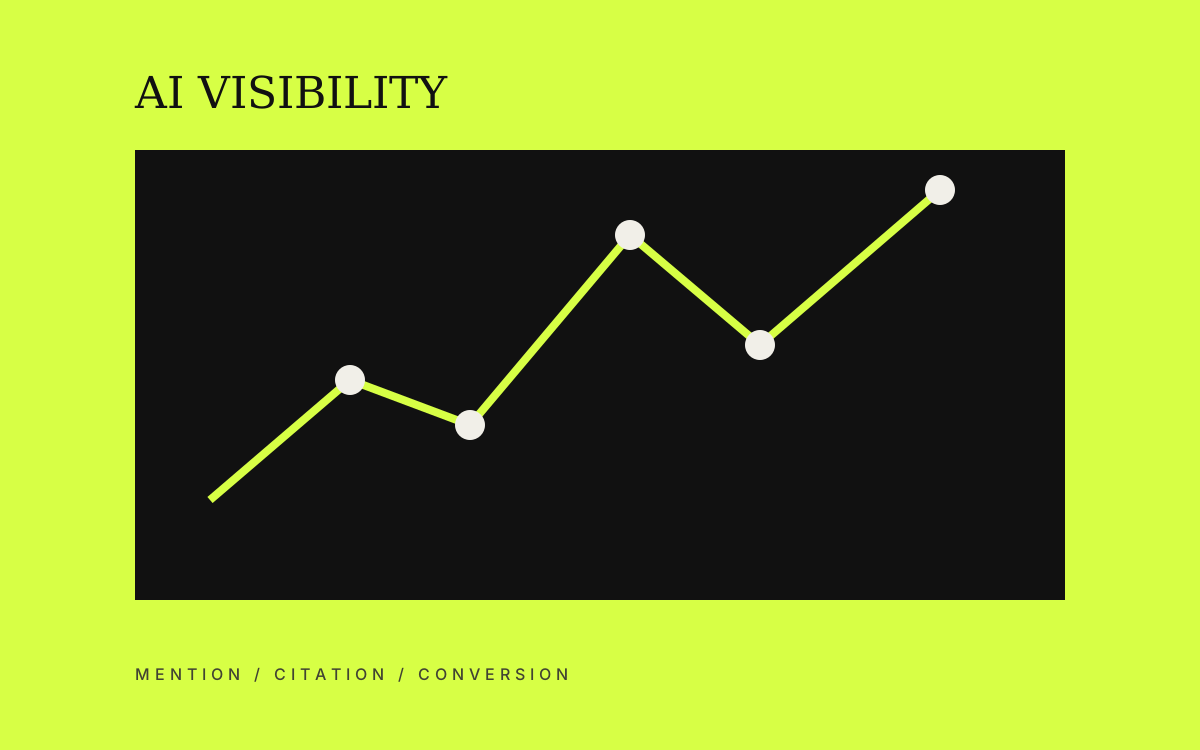
Begin with business questions rather than every metric. Show high-intent prompts, brand and competitor mentions, cited pages, factual errors, and referral conversions, then assign a page and owner for the next improvement.
Keep a changelog beside the graph—when a case study launched, robots changed, or a publication cited the brand—so the team does not claim causation without evidence.
- AI share of voice by topic and platform
- Mentions, citations, and cited pages
- Accuracy or sentiment issues
- Referral sessions, assisted conversions, and qualified leads
- Next action, owner, and review date
Image slot prepared — artwork to follow
Monthly AI Search dashboard connecting share of voice, citations, accuracy, referrals, and action owners
Preparation
Information to prepare before you start
- Business questions and prompt set
- First-party tools and tested conversion tracking
- Platforms, countries, languages, and competitors in scope
- Pilot budget and paid-tool criteria
- Dashboard, changelog, and action owners
Related services