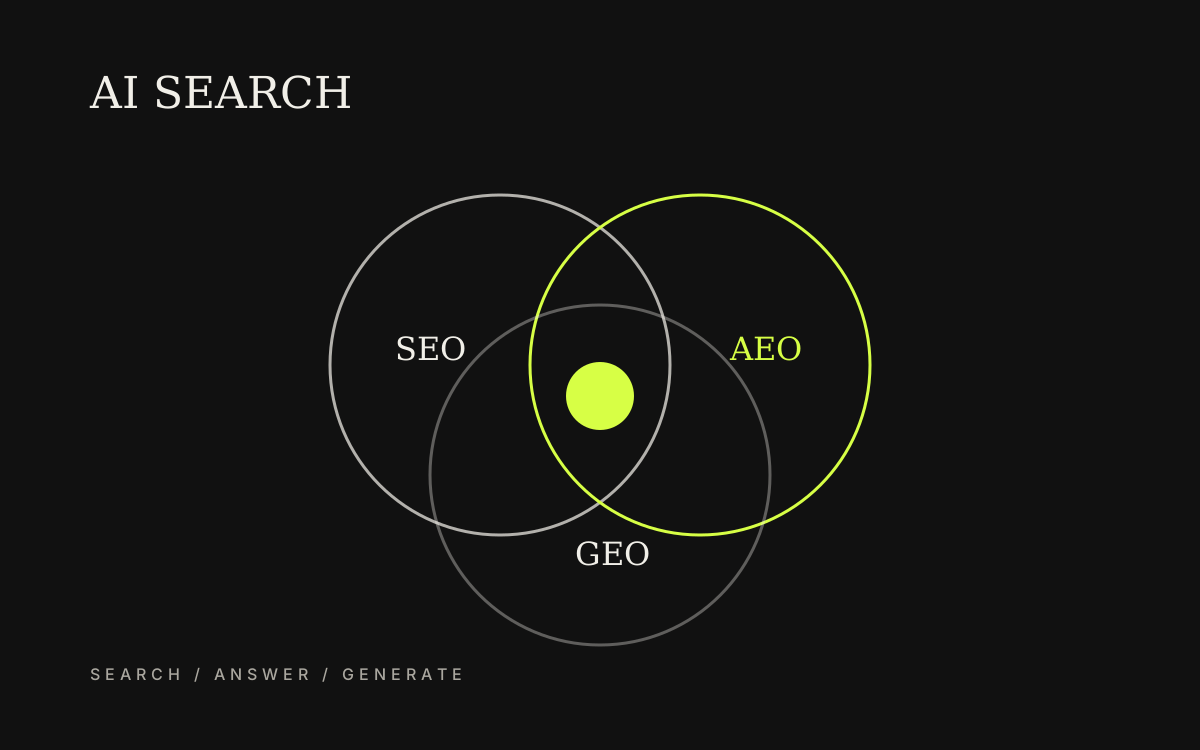
This guide turns AI Search optimization into eight verifiable steps, from crawler access, freshness, and answer blocks through entities, external authority, and measurement.
Quick summary
What you get from this article
- Fix crawler access, status codes, robots directives, and indexing before writing format.
- Build a topic map from real customer questions without duplicate page roles.
- Use direct answer blocks followed by evidence and context.
- Keep brand, author, service, and location entities consistent.
- Measure a stable prompt set and conversion from AI referrals.
Step 1: Record a baseline
Collect 20–50 real customer questions across learning, comparison, provider selection, problem solving, and branded intent. Test the platforms your audience uses with consistent language, location, and account conditions where possible.
Record brand mentions, cited pages, visible competitors, and incorrect descriptions. This baseline matters more than a proprietary score because it reveals what actually changed.
- Prompt and intent
- Platform, language, country, and date
- Mention, citation, and competitors
- Incorrect or missing facts
- Current referrals and conversions
Image slot prepared — artwork to follow
AI Search baseline table with prompt, platform, mention, citation, competitor, and accuracy fields
Step 2: Make priority pages accessible to search crawlers
Audit robots.txt, meta robots, canonicals, status codes, CDN, WAF, and bot protection so Googlebot, Bingbot, OAI-SearchBot, and PerplexityBot can access pages intended for publication. Treat search crawling and model training as separate permissions.
Use Google and Bing URL inspection plus server logs to find 403, 429, or JavaScript challenges. A robots.txt allow rule does not guarantee the firewall allows a bot through.
- Priority pages return 200 and are not noindexed
- Canonicals identify the preferred cited URL
- Main content renders as accessible HTML
- Bots avoid login, consent walls, CAPTCHA, and geo blocks
- Sitemaps include only indexable URLs
Image slot prepared — artwork to follow
Crawler access checklist through robots.txt, CDN, WAF, server, and rendered HTML
Step 3: Keep updates discoverable and consistent
Maintain XML sitemap lastmod values when content genuinely changes and use IndexNow with participating systems when URLs are added, changed, or removed. Prices, hours, addresses, terms, and product versions should agree across the site and external profiles.
Do not change article dates merely to look fresh. Show a review date and explain material changes when the subject affects decisions.
Image slot prepared — artwork to follow
Content update flow from CMS through sitemap and IndexNow to search indexes and AI answers
Step 4: Write direct answer blocks without removing context
Use a clear H2, answer the core question in the first one to three sentences, then add reasoning, steps, examples, and limitations. Readers get the point quickly and a cited passage keeps its meaning.
Do not shorten every paragraph or manufacture FAQs. Google says there is no ideal page length and no need to chunk content for AI. Aim for a complete answer rather than every keyword variation.
- Direct answer at the start of a section
- Definitions with a clear scope
- Steps that can be followed in order
- Comparison tables using consistent criteria
- Important claims with dates, units, and sources
Image slot prepared — artwork to follow
Anatomy of an answer block showing question, concise answer, evidence, example, and limitation
Step 5: Add information AI cannot replace with another generic page
Generic summaries give a retrieval system little reason to choose one page. Publish first-hand before-and-after evidence, test methods, sample sizes, mistakes, or reusable templates.
State where important claims come from. Give context for team experience, link primary research, and explain estimates. Transparency helps people and systems judge reliability.
- Original data and methodology
- Cases with baseline, change, and outcome
- Screenshots or process evidence
- Limitations and cases where the method does not fit
- Reusable templates, calculators, or checklists
Image slot prepared — artwork to follow
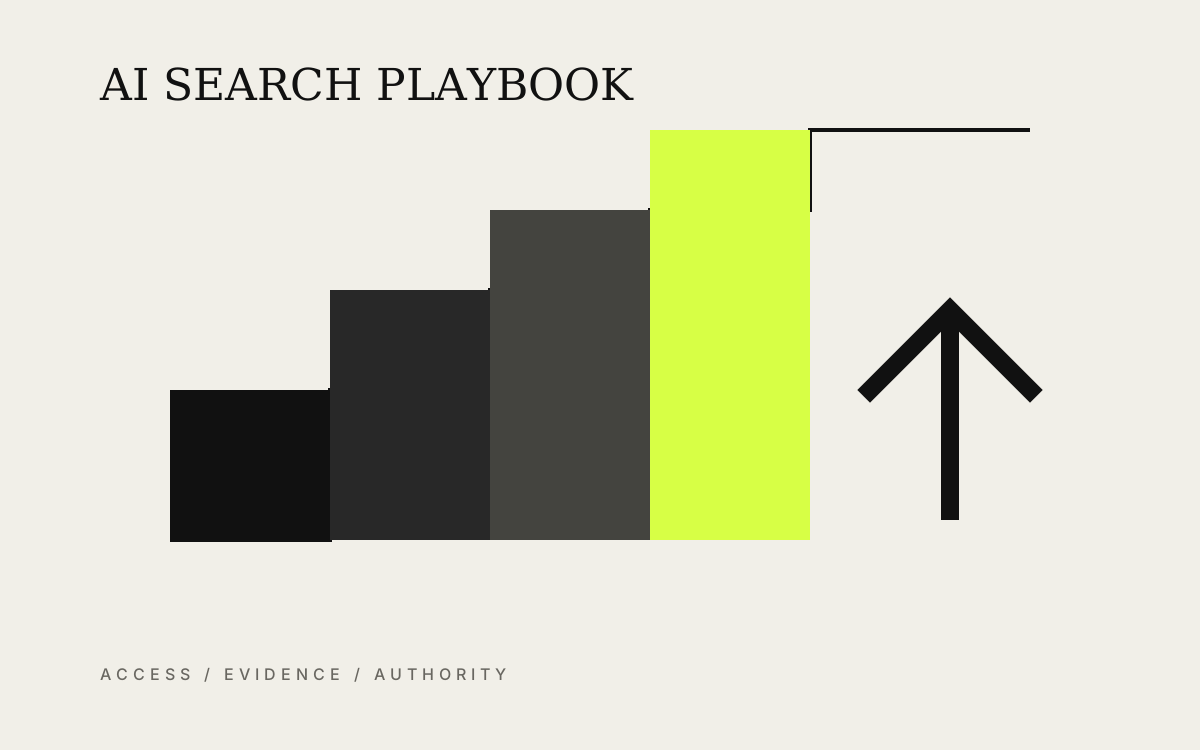
Content value ladder from generic information to experience, evidence, original data, and tools
Step 6: Align entities and visible structured data
Use consistent names for the brand, authors, services, products, and locations. Build useful About, Author, Contact, and Service pages and connect verifiable official profiles.
Structured data describes entities and supports eligible rich results, but it is not a citation switch and no AI-specific schema exists. Markup must match visible content.
- Accurate Organization or LocalBusiness information
- Person/Author pages with relevant expertise
- Article, Product, Service, or Breadcrumb where appropriate
- sameAs only for official, verifiable profiles
- No conflicting names, addresses, prices, or status
Image slot prepared — artwork to follow
Entity graph connecting brand, author, service, location, case study, and external profiles
Step 7: Build credibility beyond the website
AI Search may use what other sources say about a brand. Earn detailed reviews, joint customer cases, interviews, usable data, and digital PR that gives relevant sources a reason to mention or cite the business.
Do not manufacture mentions or buy profiles at scale. Google's quality and spam systems also apply to generative Search.
- Detailed, attributable reviews
- Citations from associations, media, partners, or specialists
- Consistent directories and business profiles
- Linkable assets worth referencing
- Transparent corrections and updates
Image slot prepared — artwork to follow
Authority loop from original assets through digital PR, citations, brand search, and AI mentions
Step 8: Measure and iterate every 30–60 days
Recheck the same prompt set on a business-appropriate schedule. Track changes in answers, cited pages, and referral conversion. Do not decide from repeated tests on one day because responses vary and may be personalised.
Diagnose three cases: not retrieved suggests technical work; cited without a clear brand mention suggests entity work; mentioned inaccurately suggests source consistency and better evidence.
- Keep prompt, platform, location, and language comparable
- Use trends across several runs, not one screenshot
- Track citation, mention, accuracy, and sentiment
- Connect referrals with lead quality and revenue
- Maintain a changelog of page updates
Image slot prepared — artwork to follow
AI Search optimisation loop from measure and diagnose through improve, publish, and recheck
Preparation
Information to prepare before you start
- Prompt baseline and competitors
- Crawler access, sitemap, canonical, and server logs
- Core entity pages for brand, author, service, and location
- Original evidence and primary sources
- Mention, citation, referral, and conversion dashboard
Related services