This guide starts with what SEO means, then separates verified 2026 changes—AI Overviews, core updates, performance, backlinks, and tools—from shortcuts that lack evidence.
Quick summary
What you get from this article
- SEO helps search systems understand content and the right people decide to visit.
- AI Overviews and AI Mode do not require special schema or files; core SEO still applies.
- First-hand evidence and unique insight beat generic summaries.
- Speed supports experience and ranking systems but cannot replace relevance.
- Backlinks remain useful when they are genuine citations rather than ranking manipulation.
What SEO is actually optimising
SEO means search engine optimisation: improving a website and its content so search systems can understand it and people seeking an answer can recognise that the page may help. Google describes SEO as helping search engines understand content and helping users decide which result to visit.
The basic path has three stages: discover the URL, crawl and index the content, then select relevant pages for a query. If a page cannot be discovered or is noindexed, great writing alone cannot rank.
A business should therefore measure more than first position. Track whether search visitors are the right audience, continue reading, and complete a valuable action.
- Discoverable — internal links and a sitemap lead to the page
- Understandable — key content is textual, well structured, and accessible
- Selectable — the page satisfies intent with quality and credibility
- Effective — the page is fast, usable, and presents a clear next step
Image slot prepared — artwork to follow
SEO journey from URL discovery and indexing to ranking and conversion
What changed in 2026: AI arrived, the foundation stayed
Google says AI Overviews and AI Mode build on its core Search ranking and quality systems. A page must be indexed and eligible for a snippet before it can appear as a supporting link. There is no extra technical requirement or AI-specific schema.
AI Mode can fan one request out into several related searches. Pages do not need every long-tail variation repeated; they need complete primary coverage, distinctive detail, and useful links to supporting subtopics.
Google's latest guidance prioritises non-commodity content: first-hand work, original comparisons, evidence, and constraints a practitioner has encountered. An llms.txt file neither improves nor harms visibility in Google Search.
Google rolled out March and May core updates plus March and June spam updates in 2026. Diagnose affected pages in Search Console after rollout rather than changing the whole site during normal volatility.
- AI Search still relies on crawlable, indexable pages
- No AI schema or artificial content chunking is required
- FAQ rich results stopped appearing in Google on 7 May 2026, though useful FAQs still help readers
- Check the Google Search Status Dashboard before diagnosing sharp traffic changes
Image slot prepared — artwork to follow
2026 Google Search timeline covering AI Search, core updates, spam updates, and FAQ rich result retirement
Treat SEO as five connected layers
Perfect on-page copy cannot help a page Google cannot access. A very fast page still loses when it misses intent, and an isolated article may be hard to understand. SEO needs a whole-system view.
- Technical — crawl, index, canonical, sitemap, hreflang, status codes, and renderable content
- Intent and content — one primary job per page, complete answers, and first-hand expertise
- On-page — titles, headings, opening answers, images, internal links, and accurate structured data
- Page experience — mobile usability, security, restraint with interruptions, and Core Web Vitals
- Authority — reputation, citations, reviews, case studies, and relevant editorial links
Image slot prepared — artwork to follow
Five connected layers of SEO: technical, content, on-page, page experience, and authority
Use the existing on-page article for the detailed audit
This site already has a dedicated on-page SEO checklist. This guide explains its role in the larger system rather than duplicating the same checklist.
How fast is good enough
Core Web Vitals in 2026 use LCP for loading, INP for responsiveness, and CLS for visual stability. Good targets are LCP at or below 2.5 seconds, INP at or below 200 milliseconds, and CLS at or below 0.1 at the 75th percentile for mobile and desktop separately.
Start with field data in Search Console and PageSpeed Insights, then use Lighthouse to reproduce causes in the lab. Chasing 100 is poor prioritisation when high-value pages pass and the larger problem is content or conversion.
- Resize and compress the hero image
- Load only required fonts and reduce render-blocking JavaScript
- Reserve dimensions for images, video, and ads
- Break up long tasks and remove unnecessary third-party code
- Use appropriate CDN, caching, and fast server responses
Image slot prepared — artwork to follow
Core Web Vitals scorecard showing LCP 2.5 seconds, INP 200 milliseconds, and CLS 0.1
Do backlinks still matter in 2026
Yes, when they are genuine citations or recommendations. Links help Google discover pages and understand web relationships. Creating links primarily to manipulate rankings is link spam under Google's policies.
A durable approach creates assets worth citing—original data, a free tool, a specialist guide, or a numerical case study—then promotes them through relevant digital PR and outreach.
Advertising and sponsorship are normal, but paid links should use rel=sponsored or nofollow. Avoid bulk link packages from unrelated sites and never judge quality from Domain Rating alone.
- Topically relevant with a real audience
- Placed where a reader has a reason to follow it
- Transparent source rather than a link-selling network
- Able to create awareness, referrals, or leads even without ranking credit
Image slot prepared — artwork to follow
Comparison between a genuine editorial backlink and spam links from a website network
The 2026 SEO toolkit and a 90-day starting plan
A tool should answer a question rather than become a score to chase. Start with Google's first-party sources, then pay for specialist software when the team has a recurring workflow and a decision the data will support.
- Days 1–30 — install measurement, audit indexing and technical blockers, record baselines
- Days 31–60 — map queries to pages, improve high-impression low-CTR pages, consolidate overlap
- Days 61–90 — fill content gaps, improve priority-page speed, launch digital PR around a useful asset
- Review clicks, qualified leads, conversions, and page-level movement monthly
Image slot prepared — artwork to follow
A 90-day SEO roadmap divided into measurement, page improvement, content, performance, and digital PR
A capable free starting stack
Use Search Console for queries, indexing, and Core Web Vitals; Analytics for behaviour and conversions; PageSpeed Insights and Lighthouse for speed; Rich Results Test for supported structured data; and Google Trends for direction of interest.
Tools for a larger site or team
Screaming Frog is useful for crawling URLs, redirects, canonicals, and metadata at scale. Ahrefs or Semrush can support competitor, query, and link research. Choose one suite the team will actually use.
The next gaps in this article library
On-page, site structure, and local SEO already have dedicated articles. The strongest next additions go deeper into measurement, technical implementation, and authority.
- Reading Search Console from impression to qualified lead
- Content audits and keyword cannibalisation
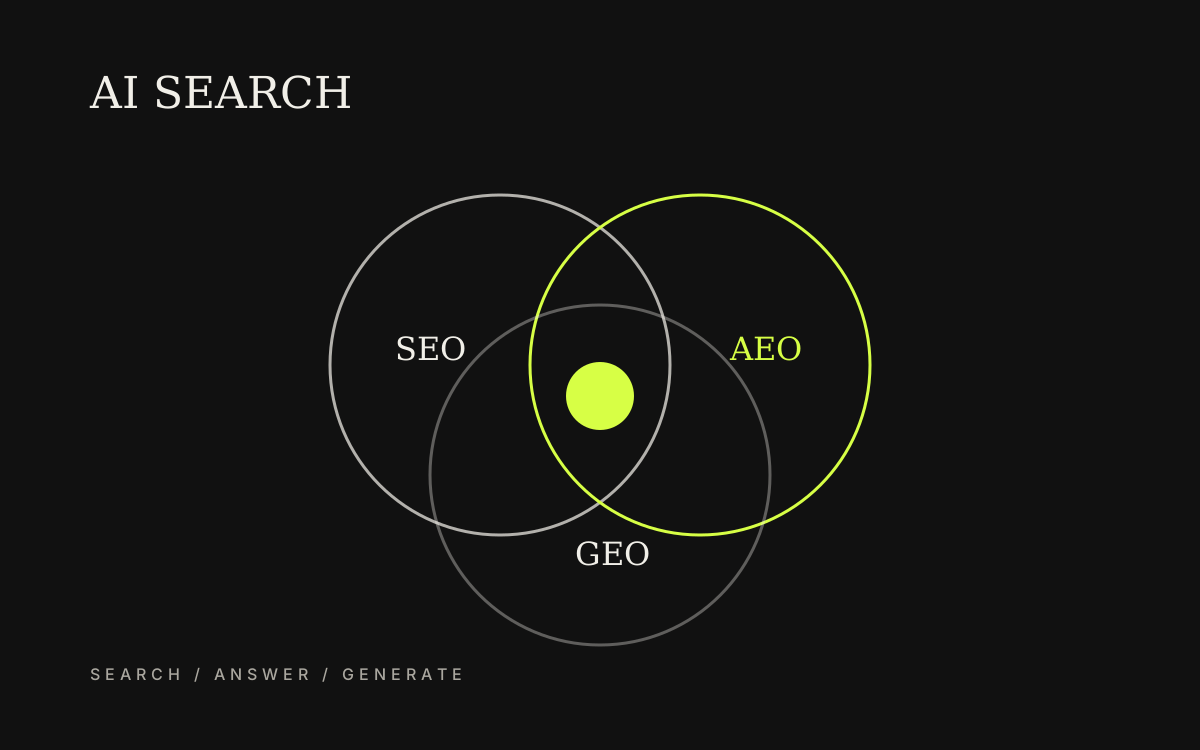
- AI Overviews and AI Mode using official guidance, not GEO tricks
- Technical SEO audits for JavaScript and Next.js sites
- SEO migrations without losing established rankings
- Digital PR planning and measurement for Thai businesses
Image slot prepared — artwork to follow
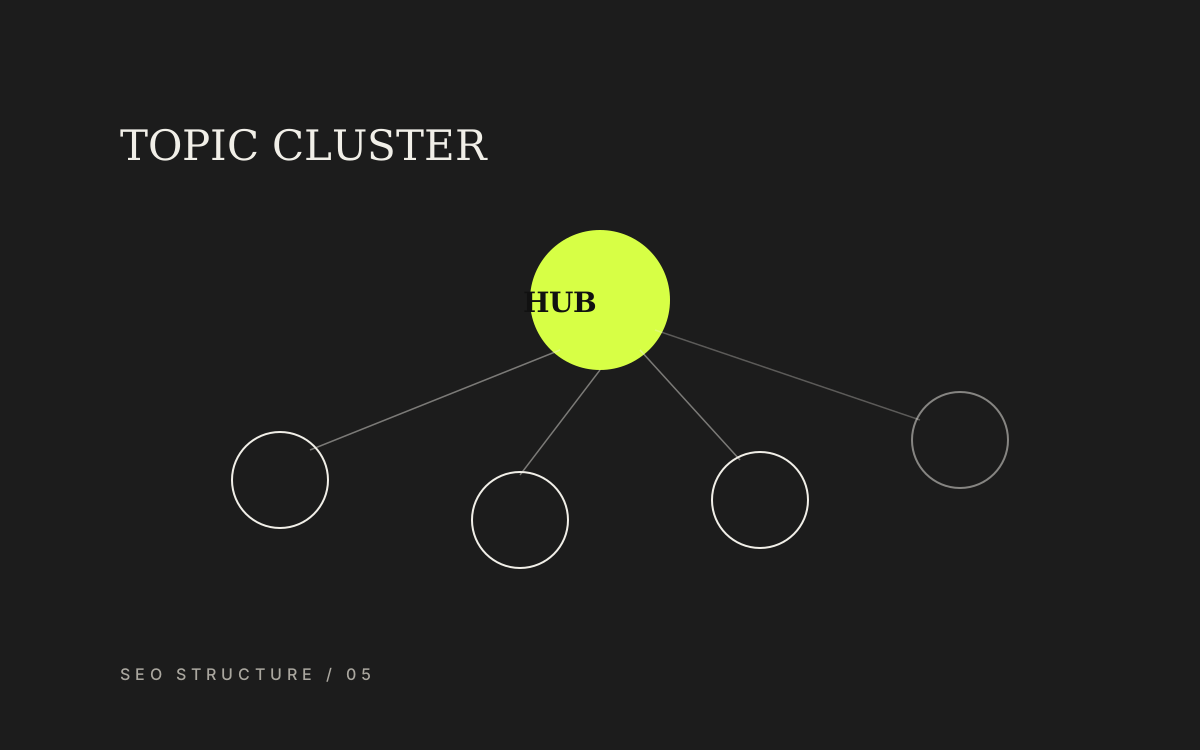
Content roadmap connecting existing SEO articles with the next recommended topic clusters
Preparation
Information to prepare before you start
- Access to Search Console and Analytics
- A list of priority pages and their business goals
- Baseline clicks, conversions, and Core Web Vitals
- Issues separated into technical, content, experience, and authority
- A named owner and monthly review cycle
Related services