Start from business questions and real user behaviour, then ship ranked insights—so design is not driven by the loudest taste in the room.
Category / Web DesignEstimated timeline / 1–3 weeksBudget / Quoted after we frame the research plan
Scroll to continueEN / 2026
Many projects draw screens before anyone knows where users get stuck—then burn budget on redesign loops. Good research is not a long report. It is evidence that tells you whether to fix the menu, the flow, or the UI first.
A strong fit when
This service fits when
New projects that are still unclear about user needs
Existing sites with traffic but weak completion
Teams that want fewer design debates driven by taste alone
Expected outcomes
What the work should make clearer
The team sees what users came to do—and where they stall before converting or finishing
A ranked problem list so effort goes to menu, flow, or UI in the right order
Fewer design debates, because decisions rest on user evidence—not meeting opinions
Quick summary
What you get when you hire this service
05
01A research plan that fits project time and budget
02Interviews or data collection with users/stakeholders
03Synthesised insights and findings
04A priority order for what to fix first
05A short document design and business can act on
From clients
What people who worked with us notice
“Before research the team argued about colour and layout. After a ranked problem list, everyone agreed menu and claim flow came before UI polish.”
“Insights were not a long deck—they were a prioritised list we could hand straight to IA. Guesswork redesign loops dropped fast.”
Related work
Example work clients can review
Swipe through cases close to your brief. Each one focuses on a measurable outcome—not looks alone.
It pays off when the brief is fuzzy, audiences differ, or the live site fails in ways you cannot explain—lots of traffic without the intended action, or debates about page priority with no evidence.
It pays off when the brief is fuzzy, audiences differ, or the live site fails in ways you cannot explain—lots of traffic without the intended action, or debates about page priority with no evidence.
If structure and flows are already clear, you can skip a long research cycle and move to later design stages.
Fictional insurance scenario: a support team is flooded with calls about claim status and policy details. The old site sells packages but offers no usable post-purchase path.
After interviews and synthesis, packages and status paths were missing from primary routes. Splitting sales vs member zones and shortening the claim flow cut status-inquiry calls by 38% in 90 days, and 62% of new claims started on the web.
Before: traffic and calls were high, but nobody knew where the site broke
After: ranked problems and a brief ready for IA/flows
Lesson: research should unlock the next design decision—not stockpile notes
02
What to clear before collecting data
Before booking interviews, lock the business questions you need answered and who to talk to.
Collecting without a guiding question often yields notes that never become decisions.
01
What to clear before fieldwork
These keep research from becoming unstructured conversation.
Business goal of the site or feature
User groups to understand in this round
Methods that fit the timeline
Who will decide from the findings
What the next design stage needs as input
Locking business questions before fieldwork keeps insights decision-ready.
03
What we actually deliver
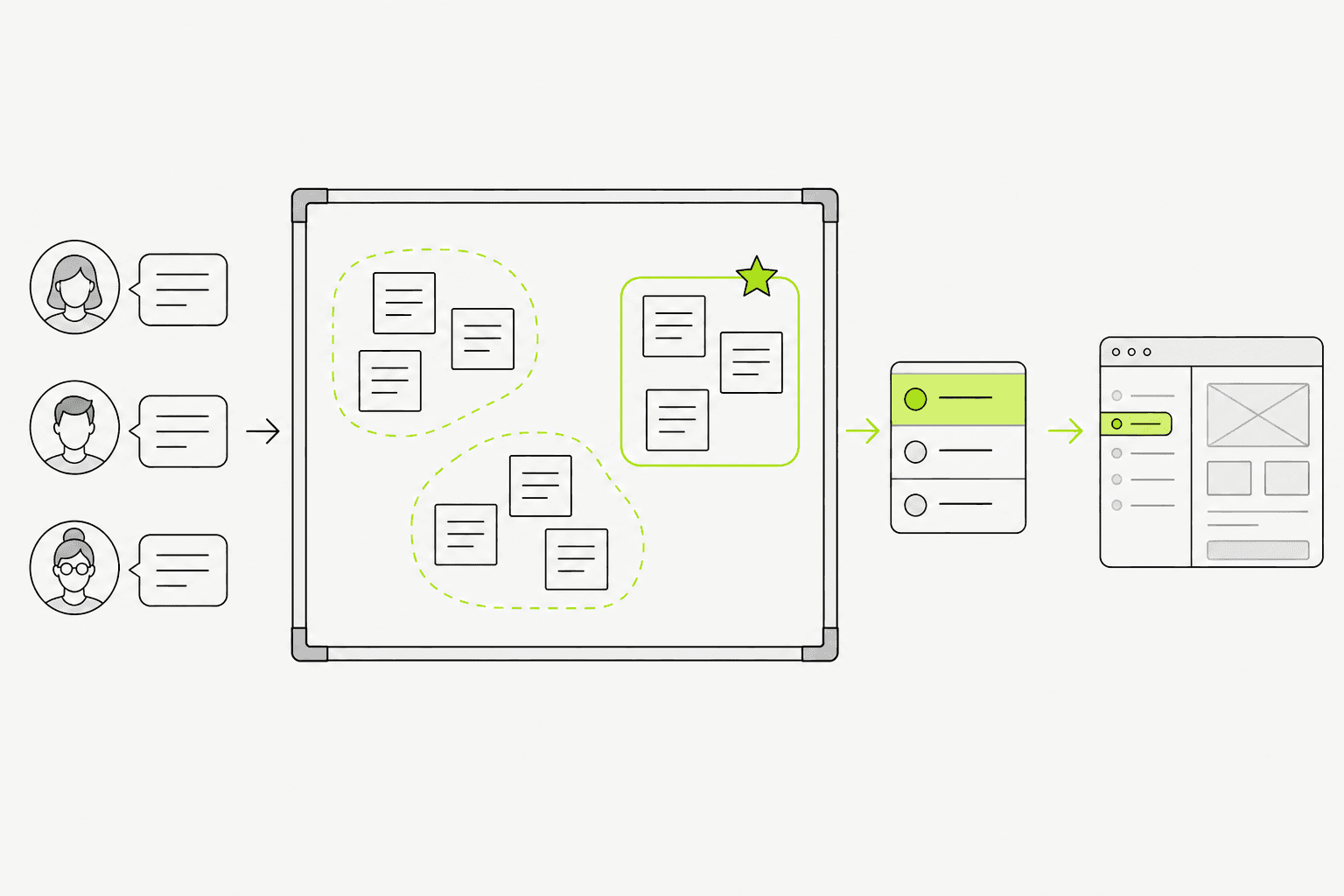
What you should keep after handover is immediately usable: ranked insights and a recommendation for whether IA, Flow, or UI comes next—not a long deck nobody will decide from.
We plan the method, run interviews or light surveys in scope, synthesise the problem list, and hand off to design with a suggested next-stage scope.
Research plan and method selection
Fieldwork with users or stakeholders
Insight synthesis and priority list
Recommendations for the next design stage
Research output should say what matters first—not only what was heard.04
Work order—and what breaks when research is skipped
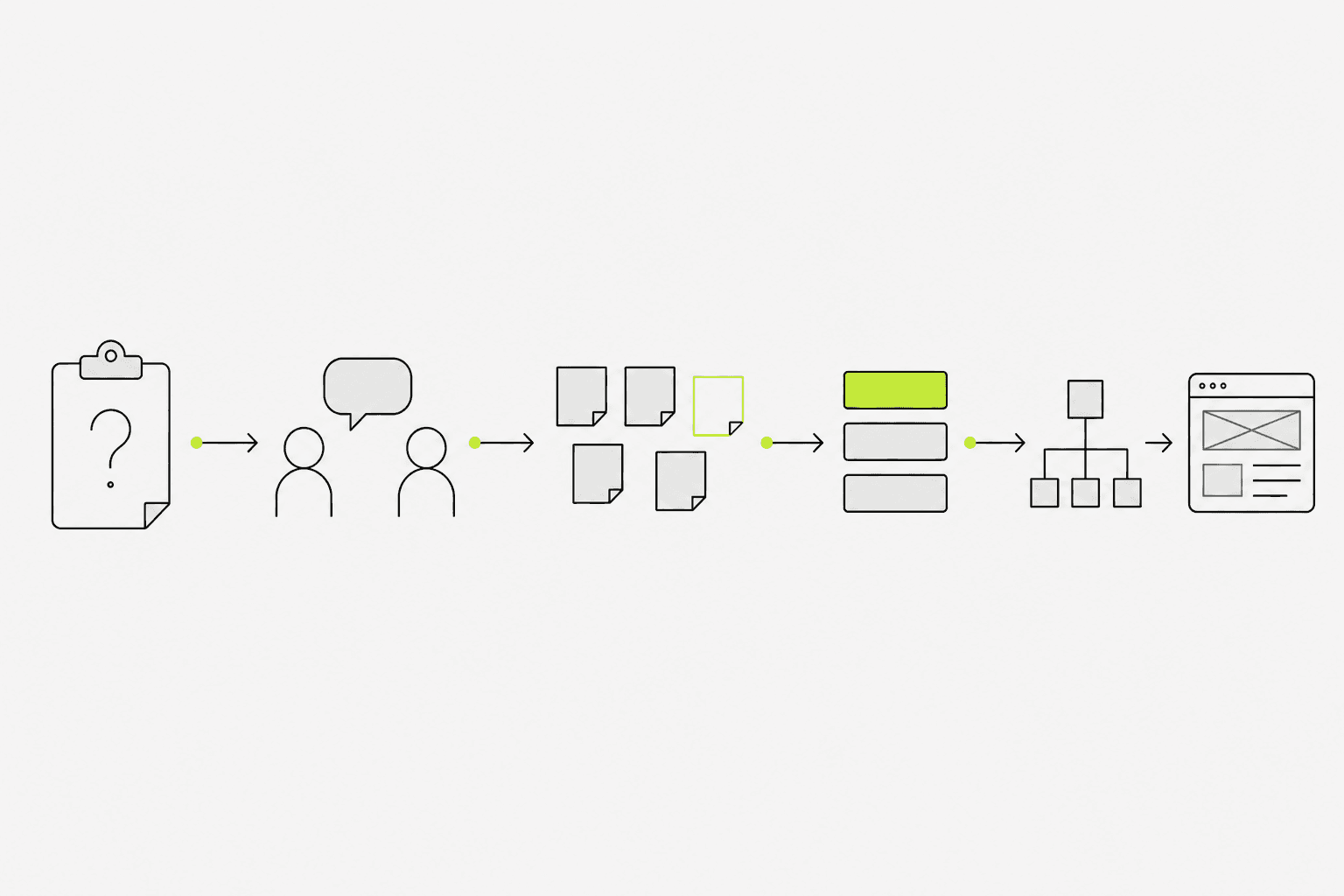
A useful order is business questions → fieldwork → synthesis → short team workshop → handoff to IA/flows.
Skipping straight to visuals often forces structural rework after real users arrive—usually more expensive than a short evidence round up front.